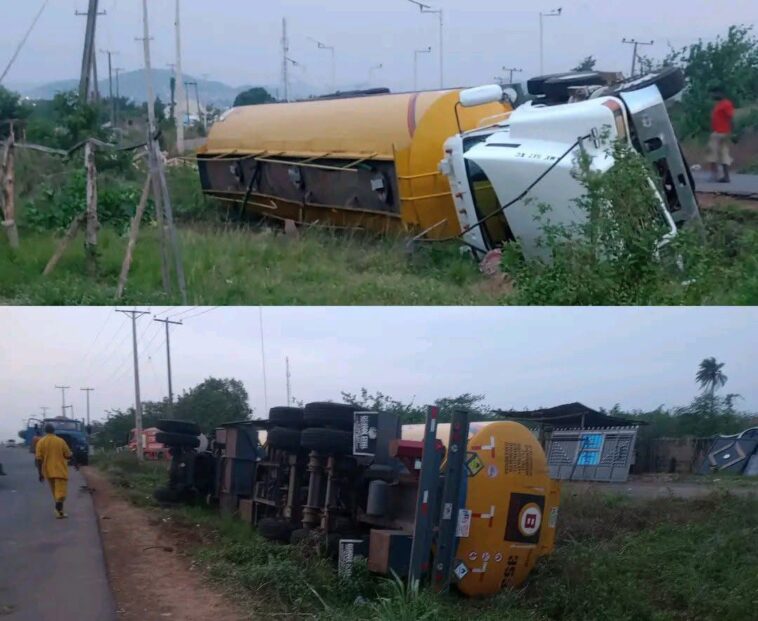
A devastating petrol tanker accident in Ado-Ekiti, Ekiti State, has resulted in the loss of over 30,000 litres of petrol, highlighting a glaring flaw in the emergency response system of BOVAS and Company Limited.
An eyewitness account reveals how a combination of poor decision-making and bureaucratic red tape led to the disastrous outcome, raising questions about the company’s preparedness for
emergency situations.
He Wrote:
I was among the first responders when an 18-wheeler tanker transporting PMS for BOVAS AND COMPANY lost its balance about 100m from New Town, Ado-Ekiti.
The driver had parked briefly for the purpose of convenience, but that decision turned costly, and I don’t blame him.
It had rained heavily the previous day, and the spot where the truck was parked was a waterway. The ground was soft. Because the tanker was fully loaded, the earth beneath the passenger-side tyres gave way. It happened too fast.
Within seconds, the tanker tilted badly so much that all the tyres on the driver’s side were lifted off the ground.
The driver tried to move the truck, but with limited traction from the four drive wheels still on the ground, it was impossible.
Another tanker arrived to help pull it out. The idea was simple, drag it backward so it could regain balance. But instead, the situation worsened.
The more they tried, the more the ground caved in, and the tanker leaned even further, plus being a grassland made the whole effort fail.
Because of the nature of my work, I travel a lot. l’ve seen enough breakdowns to know how these things go and how rarely people stop to help.
So l don’t drive past situations like this without getting involved. I was with the drive and the truck all through the night, I have a base not too far from that location which made providing support a bit easy for me.
From what I observed, the solution was obvious: call a heavy-duty tow truck.
We did.
They came, assessed the situation, and requested A180,000 to stabilize and recover the tanker safely. That was where the real problem began.
After a long back-and-forth to get approval, it became clear, shockingly, that BOVAS, a company with over 1,000 trucks moving PMS, diesel, and jet fuel across Nigeria, does not have a proper and dedicated emergency response system for situations like this.
The driver was calling supervisors, who had to call other supervisors, who needed to wait for supervisors… during an emergency that could result in huge loss for the company?
Instead of approving the tow truck, the directive from whoever was on the phone was this:
Bring another tanker and transfer the product into it so the stuck truck can drive out.
On paper, it sounds reasonable. But those of us on ground knew better. That tanker was already unstable. Between the previous night and that morning, it had tilted even further.
Any movement, especially the internal shifting of fuel during transfer, could bring it crashing down. It was obvious, but the layers of supervisors did not understand the severity of the situation.
The tow truck operators had brought their truck, even offered a safer alternative:
Attach a winch line to hold the tanker in place while the fuel was being transferred.
That way, it wouldn’t fall, Simple, Logical and Preventable.
But because there was no proper authority structure for emergencies, and because of the earlier hesitation to approve the tow truck, plus, the instruction was clear:
If you’re transterring the fuel, you will not use the tow truck.
And that was final…the tow truck was on standby, it could have attached a wench to the tanker to stabilise it during the transfer of contents, but unfortunately, bureaucracy didn’t understand the situation, and the approval for the payment to the tow truck operators was not given.
So the drivers went ahead with the transfer of PMS, hoping for the best.
𝗙𝗼𝗹𝗹𝗼𝘄 𝗢𝘂𝗿 𝗪𝗵𝗮𝘁𝘀𝗔𝗽𝗽 𝗖𝗵𝗮𝗻𝗻𝗲𝗹 𝗧𝗼 𝗚𝗲𝘁 𝗟𝗮𝘁𝗲𝘀𝘁 𝗡𝗲𝘄𝘀 𝗔𝘀 𝗜𝘁'𝘀 𝗗𝗿𝗼𝗽!