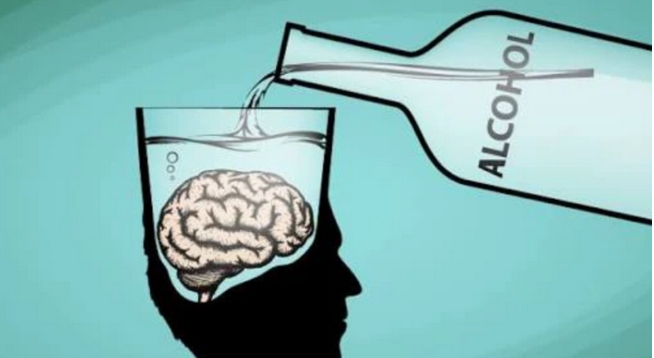
It affects far more than just your mood.
Brain: Alcohol crosses the blood-brain barrier, altering neurotransmitters like GABA (inhibitory) and glutamate (excitatory), which leads to impaired coordination, judgment, and slowed reaction times .
Liver: The liver prioritizes metabolizing alcohol into acetaldehyde, a highly toxic byproduct that causes inflammation and oxidative stress, potentially leading to fatty liver disease or cirrhosis over time.+See more details
Gut Health: Alcohol irritates the digestive lining and can disrupt the microbiome, leading to “leaky gut” and systemic inflammation .
Sleep and Hormones: Alcohol significantly disrupts REM cycles and suppresses growth hormones, resulting in poor recovery and daytime fatigue , despite the fact that it may assist you in falling asleep more quickly.
Dehydration: As a diuretic, alcohol forces the kidneys to release more water than consumed, leading to the electrolyte imbalances often associated with hangovers .
The National Institute on Alcohol Abuse and Alcoholism (NIAAA) provides resources for comprehending the effects of alcohol, and the NHS Drink Less guide provides practical steps for reducing consumption for those looking to evaluate their habits.+See more details
Get Breaking News Before Everyone Else — Join Our Whatsapp Channel Now!!!
𝗙𝗼𝗹𝗹𝗼𝘄 𝗢𝘂𝗿 𝗪𝗵𝗮𝘁𝘀𝗔𝗽𝗽 𝗖𝗵𝗮𝗻𝗻𝗲𝗹 𝗧𝗼 𝗚𝗲𝘁 𝗟𝗮𝘁𝗲𝘀𝘁 𝗡𝗲𝘄𝘀 𝗔𝘀 𝗜𝘁'𝘀 𝗗𝗿𝗼𝗽!