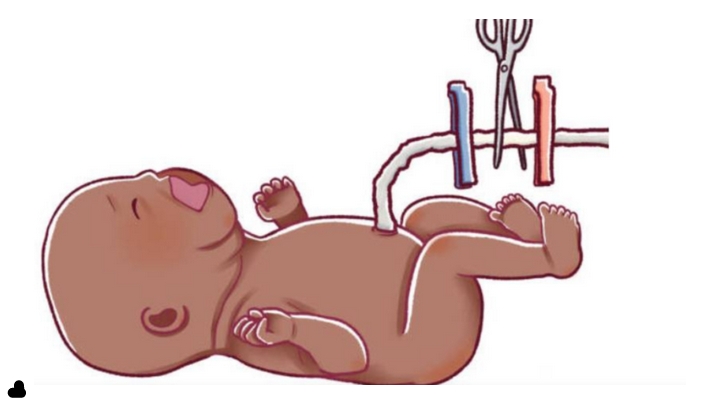
When a baby is born, one of the most important steps that happens within minutes is the clamping of the umbilical cord, usually with a sterile plastic peg.
While it may seem like a simple act, it serves critical medical and health purposes for both the newborn and the mother.
The first key reason is to stop excessive blood loss. The umbilical cord is rich with blood vessels that connect the baby to the placenta. Once the baby is out, clamping prevents blood from.
continuously flowing, protecting the infant from losing too much blood.
Secondly, it helps prevent infections. An open cord can easily allow bacteria to enter the baby’s bloodstream. By clamping and later cutting the cord, doctors seal this pathway and lower the risk of life-threatening infections.
Third, it allows the baby to begin independent breathing and circulation. Until birth, oxygen comes through the cord.
Once clamped, the baby’s lungs take over, and this encourages normal adaptation to life outside the womb.
Fourth, clamping provides a safe and clean way to separate the baby from the placenta, which must be delivered afterwards.+See more details
Finally, the peg ensures controlled healing of the stump, which dries and eventually falls off safely. This natural process helps form the baby’s belly button.
In short, clamping the umbilical cord is a vital procedure that ensures safety, hygiene, and a smooth transition for the newborn into the world.
Get Breaking News Before Everyone Else — Join Our Whatsapp Channel Now!!!
𝗙𝗼𝗹𝗹𝗼𝘄 𝗢𝘂𝗿 𝗪𝗵𝗮𝘁𝘀𝗔𝗽𝗽 𝗖𝗵𝗮𝗻𝗻𝗲𝗹 𝗧𝗼 𝗚𝗲𝘁 𝗟𝗮𝘁𝗲𝘀𝘁 𝗡𝗲𝘄𝘀 𝗔𝘀 𝗜𝘁'𝘀 𝗗𝗿𝗼𝗽!