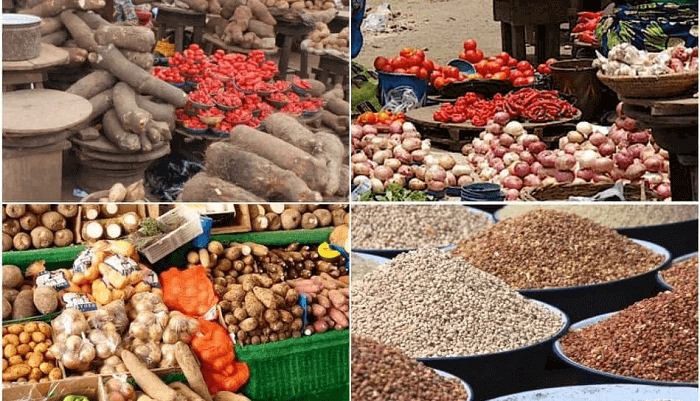
Food prices across Nigeria have tightened further in April 2026, deepening pressure on households already grappling with a high cost of living.
Fresh market checks and retail data suggest that the upward trend seen earlier in the year has not only persisted but intensified in key urban centres, particularly Lagos.
As gathered, the price of a 50kg bag of rice has climbed to about N61,000, marking a notable increase from N56,000 recorded in January.
This steady rise reflects ongoing supply chain disruptions, currency pressures, and elevated transportation costs.
Data from Supermart.ng shows that other staple items remain expensive, with little relief in sight for consumers.
A paint bucket of garri now averages ₦1,900, while medium-sized yam tubers sell between N3,700 and N3,900.
Protein sources are equally strained, as frozen chicken prices hover around N6,000 per kilogram. Onions, a basic cooking ingredient, currently range from N1,400 to N1,500 per kilogram.
The broader market tells a tougher story. Food inflation has accelerated again after a brief slowdown earlier in the year. High fuel prices continue to inflate transportation and logistics costs, which traders inevitably pass on to consumers.
Both locally produced and imported food items are affected, highlighting systemic challenges rather than isolated supply issues.
In fact, Nigeria’s food price pressures are reflected in key staples as of April 2026. A 50kg bag of rice now sells for about N61,000, while frozen chicken costs roughly N6,000 per kilogram. Basic household staples remain elevated, with a paint bucket of garri priced around N1,900. Yam, a common dietary staple, goes for between N3,700 and N3,900 per medium tuber, while onions are currently sold at N1,400 to N1,500 per kilogram, underscoring the persistent rise in everyday food costs.
In Lagos, price volatility is particularly pronounced.
Major food hubs such as Oyingbo Market and Mile 12 Market report frequent price swings, especially for perishable goods like vegetables, peppers, and tomatoes.
Mrs. Adebimpe Jimoh, a traders cite “inconsistent supply farming regions and rising haulage costs as key drivers”.
For households, the impact is immediate and severe. Daily meal planning has become more unpredictable, with staples like beans and tubers seeing noticeable increases. Many families are adjusting portion sizes, switching to cheaper alternatives, or cutting back on protein intake altogether.
In plain terms, food affordability remains under serious strain, and without a significant easing in inflationary pressures or transport costs, prices are unlikely to stabilise in the near term.Get The Full, Details. .
Get Breaking News Before Everyone Else — Join Our Whatsapp Channel Now!!!
𝗙𝗼𝗹𝗹𝗼𝘄 𝗢𝘂𝗿 𝗪𝗵𝗮𝘁𝘀𝗔𝗽𝗽 𝗖𝗵𝗮𝗻𝗻𝗲𝗹 𝗧𝗼 𝗚𝗲𝘁 𝗟𝗮𝘁𝗲𝘀𝘁 𝗡𝗲𝘄𝘀 𝗔𝘀 𝗜𝘁'𝘀 𝗗𝗿𝗼𝗽!