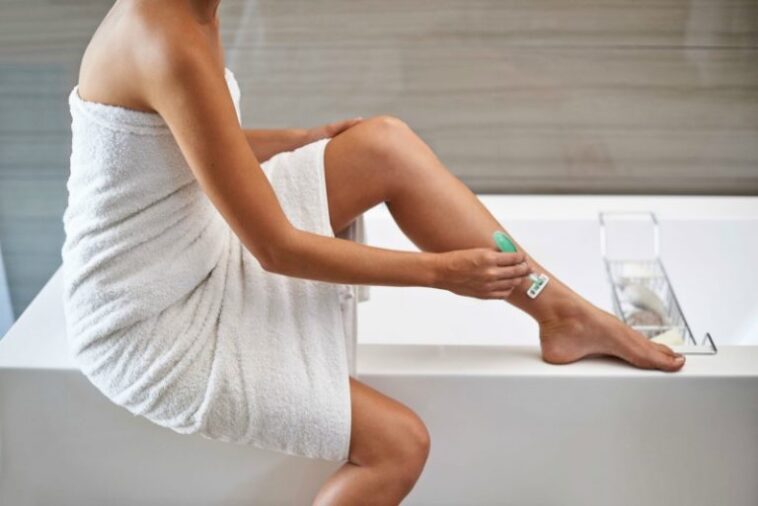
After shaving, waxing, or plucking, the hair may curl and turn inward. This results in skin cells growing over the hair. They become trapped and cause bumps to form.
What are Razor bumps?
Razor bumps, medically known as pseudofolliculitis barbae, are ingrown hairs that develop after shaving or using other hair removal techniques.
Ingrown hairs form when hair starts to grow back into the skin, rather than up and out. After shaving, waxing, or plucking, the hair may curl and turn inward.
This results in skin cells growing over the hair. They become trapped and cause bumps to form.
Razor bumps can develop anywhere a person shaves or removes hair, including the face, head, legs, armpits, and pubic area. Find below how to treat razor bumps and prevent them from forming:
1. Stop shaving
Though it is not practical, the only sure way to prevent razor bumps is to stop shaving. New razor bumps may continue to appear for a while after stopping shaving, as new hairs emerge. However, the bumps should disappear after around 3 months.
2. Use salicylic acid
Salicylic acid is a beta hydroxy acid that unclogs pores, sloughs off dead skin cells, and treats inflammation, allowing razor bumps to heal. Salicylic acid can be found:
- Cleansers
- Toners
- Lotions
- Peel
3. Try glycolic acid
Like salicylic acid, glycolic acid helps the skin peel by removing old cells from the surface of the skin. Glycolic acid is an alpha hydroxy acid. Glycolic acid reduces the curvature of the hair and lessens the risk of it reentering the skin.
4. Use scrubs with caution
Scrubbing can remove dead skin cells that plug the pores and keep hairs trapped inside. These types of skin care scrub may contain sugar, salt or ground fruit pits. Scrubs may remove debris and free ingrown hairs by physically sloughing off dead skin cells.
5. Brushing the skin
Using a soft brush, you can help remove dead skin cells and debris that clog the pores gently and guide hairs out of the pores to stop them from becoming trapped. Brushing can also help train the hair to grow in a single direction, making ingrown hairs less likely.#
6. Use a warm washcloth
Applying a warm, wet washcloth to the skin can help soften the skin and draw the ingrown hair out, especially when a person combines it with another option, such as brushing.See Full Details. .
Get Breaking News Before Everyone Else — Join Our Whatsapp Channel Now!!!
𝗙𝗼𝗹𝗹𝗼𝘄 𝗢𝘂𝗿 𝗪𝗵𝗮𝘁𝘀𝗔𝗽𝗽 𝗖𝗵𝗮𝗻𝗻𝗲𝗹 𝗧𝗼 𝗚𝗲𝘁 𝗟𝗮𝘁𝗲𝘀𝘁 𝗡𝗲𝘄𝘀 𝗔𝘀 𝗜𝘁'𝘀 𝗗𝗿𝗼𝗽!