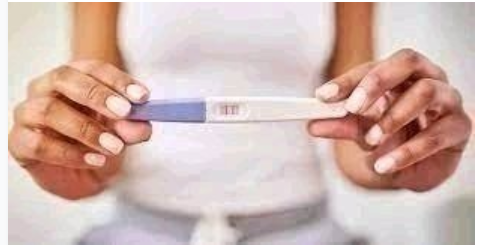
Many women often wonder how soon pregnancy can occur after their monthly period.
According to research, the answer depends on the timing of a woman’s ovulation and the length of her menstrual cycle.
While many believe pregnancy only happens mid-cycle, studies show that some women can conceive just a few days after their period ends.
For women with shorter cycles, ovulation may happen earlier than expected. If ovulation occurs within 8 to 12 days after the first day of the period, sperm present in the reproductive tract can survive long enough to…Read More…>>>
fertilize the egg. Since sperm can live for up to five days inside the body, having unprotected intercourse soon after menstruation may still lead to pregnancy.
On average, most women ovulate around day 14 of a 28-day cycle. In such cases, the fertile window usually begins about five days before ovulation. This means pregnancy risk is lower immediately after the period, but it is not completely zero.
Variations in cycle length, stress, hormonal changes, or irregular periods can shift ovulation earlier or later, increasing the chances of early fertilization.
In general, a woman can become pregnant as early as 3 to 7 days after her period, especially if she has a shorter or irregular cycle.
This window may be even wider for women whose bodies do not follow a predictable pattern.
Understanding your cycle, tracking ovulation, and using protection consistently are key to preventing unplanned pregnancies.+See more details
Likewise, for couples trying to conceive, knowing the fertile window can improve the chances of success.
𝗙𝗼𝗹𝗹𝗼𝘄 𝗢𝘂𝗿 𝗪𝗵𝗮𝘁𝘀𝗔𝗽𝗽 𝗖𝗵𝗮𝗻𝗻𝗲𝗹 𝗧𝗼 𝗚𝗲𝘁 𝗟𝗮𝘁𝗲𝘀𝘁 𝗡𝗲𝘄𝘀 𝗔𝘀 𝗜𝘁'𝘀 𝗗𝗿𝗼𝗽!