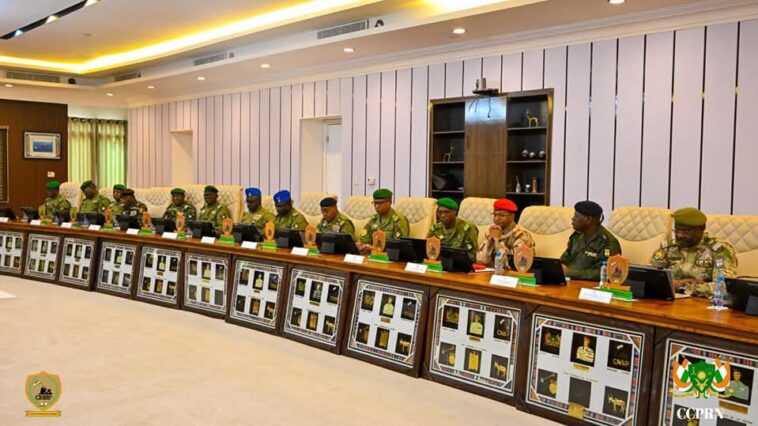
Tensions in the Sahel region have intensified following a coordinated armed attack on Dori Hamani International Airport in Niamey, Niger’s capital, with the country’s military leader, General Abdourahamane Tchiani, accusing France, Benin and Côte d’Ivoire of sponsoring the assault.
The attack, which occurred during the night of January 28–29, underscored growing concerns over the boldness of armed groups and the fragility of regional security arrangements.+Full Details. . .
According to security sources, the assailants arrived on motorcycles with headlights switched off, allowing them to infiltrate the city and launch the operation undetected.
Military Facilities Targeted
Reports indicate that the attackers targeted military installations located within the civilian airport complex, including drone platforms, air defence systems, and commercial aircraft belonging to Air Côte d’Ivoire and ASKY Airlines.
Weapons reportedly used during the several-hour assault included mortars, drones and small arms.
The Nigerien Defence and Security Forces, supported by personnel of the Russian African Corps, successfully repelled the attack. Authorities confirmed that four security personnel were injured, while 20 attackers were neutralised, 11 arrested, and several motorcycles destroyed or seized. No civilian casualties were recorded.
Strategic Location Raises Alarm
The incident triggered widespread concern due to the airport’s proximity to the presidential residence and its strategic importance.
The facility hosts an operational air force base, a newly constructed drone facility, and the headquarters of a tri-national counterterrorism force involving Niger, Mali and Burkina Faso.
The airport also reportedly serves as a storage site for uranium awaiting export, a sensitive issue amid ongoing tensions with French nuclear company Orano, which has accused Niger of expropriating uranium shipments.
Tchiani Accuses Foreign States
In a strongly worded public address, General Tchiani accused France, Benin and Côte d’Ivoire of backing the attackers.
“We have heard enough barking from the sponsors of these mercenaries… they too will soon hear from us,” Tchiani said.
He further linked the attack to alleged foreign opposition against a purported plan to transfer 1,000 tonnes of uranium to Russia, although these claims have not been independently verified.
Questions Over Perpetrators
The attack has drawn comparisons with the September 2024 assault on Modibbo Keita International Airport in Bamako, Mali, which was claimed by the jihadist group JNIM. However, unlike the Bamako incident, no group has claimed responsibility for the Niamey attack, and analysts note differences in tactics that raise questions about the identity and motives of the perpetrators.
Security and Diplomatic Implications
Security analysts warn that the Niamey attack exposes critical vulnerabilities, particularly the ability of mobile, lightly armed groups to strike high-value urban targets.
It also highlights gaps in intelligence sharing and regional cooperation, while raising concerns that political disputes could worsen security threats.
Observers caution that the public accusation of foreign governments without verifiable evidence could inflame diplomatic tensions and complicate Niger’s relations with regional and international partners.
Security analyst Zagazola noted that the incident may signal a new phase in the operational boldness of Sahel-based armed groups, capable of testing both state forces and their allies.
As investigations continue, Niger faces the twin challenge of strengthening critical infrastructure security while carefully managing sensitive international relationships, particularly amid allegations of uranium diversion and foreign interference.+See More Details. . .
LeadNaija News will continue to monitor developments and provide verified updates.
Get Breaking News Before Everyone Else — Join Our Whatsapp Channel Now!!!
𝗙𝗼𝗹𝗹𝗼𝘄 𝗢𝘂𝗿 𝗪𝗵𝗮𝘁𝘀𝗔𝗽𝗽 𝗖𝗵𝗮𝗻𝗻𝗲𝗹 𝗧𝗼 𝗚𝗲𝘁 𝗟𝗮𝘁𝗲𝘀𝘁 𝗡𝗲𝘄𝘀 𝗔𝘀 𝗜𝘁'𝘀 𝗗𝗿𝗼𝗽!