Dry spells in intimacy happen to many couples—whether from stress, health issues, or life changes. You might wonder if skipping sex for months or years quietly affects your body or mind.
While some thrive with less activity, research suggests regular intimacy offers benefits that prolonged abstinence might reduce for others.
And one area where differences show up most clearly—for both men and women—comes later in this list.
Why Sexual Activity Plays a Role in Wellness
Intimacy involves more than connection; it triggers hormone releases like oxytocin, endorphins, and dopamine. These support mood, stress relief, and bonding.
Studies link regular sexual activity (whatever “regular” means for you) to potential advantages in heart health, sleep, and immunity. On the flip side, long periods without may correlate with certain changes—though individual experiences vary widely.
Factors like age, overall health, and relationship status matter greatly. What’s supportive for one person might not apply to another.
5 Areas Where Research Notes Potential Differences
Here are key ways science explores how sexual frequency might influence health. Evidence comes mostly from observational studies and some clinical research.
1. Stress and Mood Management
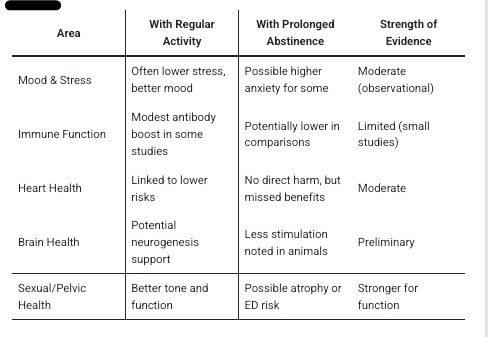
Intimacy often acts as a natural stress reliever, boosting feel-good hormones. Prolonged abstinence can sometimes link to higher reported stress or anxiety levels in studies.
Many find other outlets—like exercise or meditation—help equally well. But for couples, reigniting intimacy can restore that built-in emotional boost.
2. Immune System Support
A small but often-cited study from Wilkes University found college students with moderate sexual frequency (1–2 times weekly) had higher levels of salivary immunoglobulin A—an antibody tied to immune defense—compared to those with none or very frequent activity.
Regular intimacy might give the immune system a gentle workout through hormonal shifts.
Long abstinence doesn’t weaken immunity drastically, but some research suggests modest differences.
3. Cardiovascular Health
Some large-scale studies associate frequent sexual activity with lower risks of heart issues, possibly from improved fitness, lower blood pressure during arousal, and stress reduction.
Men with regular ejaculation show potential links to reduced prostate concerns in certain research. Abstinence alone isn’t a direct risk, but maintaining activity supports overall heart habits.
4. Brain and Cognitive Function
Animal studies show sexual behavior promotes new neuron growth in the hippocampus—a key area for memory and learning.
Human evidence is limited, but intimacy’s role in reducing stress (which harms brain health) offers indirect support.
Over time, less activity might mean missing out on these neuroprotective effects for some. Keeping the brain active in various ways remains key.
5. Sexual Function and Pelvic Health
The most noticeable area: “Use it or lose it” applies somewhat here. In men, prolonged inactivity can contribute to erectile challenges over time, as vascular and muscular health benefit from regular engagement.
For women, abstinence may link to reduced vaginal lubrication or pelvic floor tone, especially post-menopause.
Regular activity helps maintain elasticity and strength naturally.
Quick Comparison of Potential Effects

If intimacy has paused, you’re not alone—and options exist:
- Communicate openly — Talk with your partner about desires and concerns.
- Prioritize non-sexual touch — Hugging or massage releases similar bonding hormones.
- Focus on solo health — Exercise, sleep, and nutrition support many of the same benefits.
- Seek professional guidance — Therapists or doctors can address underlying issues like libido changes or medical factors.
- Ease back in — Start small when ready—no pressure needed.
Pro tip: Pelvic floor exercises (like Kegels) benefit everyone, regardless of activity level.
Real Insights from Research and Life
Many couples rediscover closeness and notice improved energy or mood.
Others choose abstinence happily and report no issues—health is deeply personal.
The key? Listen to your body and relationship needs.
Final Thoughts
Regular sexual intimacy offers potential perks for physical and mental well-being, backed by varying levels of research. Prolonged abstinence isn’t inherently “dangerous,” but some may miss supportive effects over time.
Prioritize what feels right for you. If concerns arise—about function, mood, or health—professional advice makes all the difference.
Connection, in whatever form, nurtures us best.
Frequently Asked Questions
Does going without sex harm your health permanently?
No evidence suggests permanent damage for most. Bodies adapt, and many healthy people abstain long-term without issues.
How often is “regular” for benefits?
Studies vary—often 1–2 times weekly shows associations, but quality and personal satisfaction matter more than frequency.
Can abstinence be healthy?
Absolutely. Voluntary abstinence links to positive outcomes in some research, especially when aligned with personal values.
This article is for educational purposes only and is not medical advice. Sexual health varies greatly.
Always consult a healthcare provider or therapist for personalized guidance on intimacy, function, or well-being concerns. Individual experiences differ.
Get Breaking News Before Everyone Else — Join Our Whatsapp Channel Now!!!
𝗙𝗼𝗹𝗹𝗼𝘄 𝗢𝘂𝗿 𝗪𝗵𝗮𝘁𝘀𝗔𝗽𝗽 𝗖𝗵𝗮𝗻𝗻𝗲𝗹 𝗧𝗼 𝗚𝗲𝘁 𝗟𝗮𝘁𝗲𝘀𝘁 𝗡𝗲𝘄𝘀 𝗔𝘀 𝗜𝘁'𝘀 𝗗𝗿𝗼𝗽!