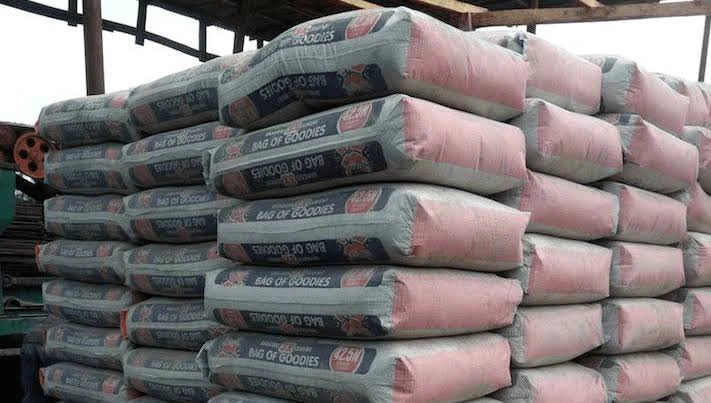
The Nigerian cement market appears to be settling into a relatively stable pricing pattern, with leading manufacturers selling their products within a narrow price band across major markets.
Market checks conducted by Naija News on Saturday indicate that Dangote Cement is currently selling for ₦10,000 per 50kg bag.
BUA Cement is also maintaining the same price of ₦10,000 per bag, reflecting near parity between the two market leaders.+See more details
However, Mangal Cement, a key player largely serving northern markets, is selling at a slightly lower price of ₦9,800 per 50kg bag, making it ₦200 cheaper than Dangote and BUA.
The marginal difference has attracted attention among builders and distributors, particularly in regions where price sensitivity remains high.
Input Costs Continue To Shape Cement Pricing
Despite the apparent price stability, industry watchers note that cement prices remain influenced by several underlying cost factors. The cost of energy, particularly for fuel and power used in cement production, continues to play a major role, as manufacturers rely heavily on alternative power sources due to unreliable grid electricity.
Transportation expenses also remain a significant factor, with rising fuel prices affecting the movement of raw materials to factories and finished products to distribution points across the country.
Exchange rate pressure and raw materials
Exchange-rate volatility has further affected cement pricing, particularly for imported machinery parts and production inputs. While most cement raw materials are locally available, maintenance and spare parts remain largely dependent on foreign exchange, thereby increasing operational costs for producers.
In addition, the cost of limestone mining, packaging materials, and logistics continues to influence the final price paid by consumers.
Demand, competition keep prices within range
Industry analysts say sustained demand from the construction sector, coupled with competition among major producers, may be helping to keep prices within a tight range for now. Large-scale infrastructure projects, private real estate development, and ongoing housing demand have ensured steady consumption.
At the same time, competition among manufacturers appears to be limiting sharp price increases, with firms carefully adjusting prices to retain market share.
Get Breaking News Before Everyone Else — Join Our Whatsapp Channel Now!!!
𝗙𝗼𝗹𝗹𝗼𝘄 𝗢𝘂𝗿 𝗪𝗵𝗮𝘁𝘀𝗔𝗽𝗽 𝗖𝗵𝗮𝗻𝗻𝗲𝗹 𝗧𝗼 𝗚𝗲𝘁 𝗟𝗮𝘁𝗲𝘀𝘁 𝗡𝗲𝘄𝘀 𝗔𝘀 𝗜𝘁'𝘀 𝗗𝗿𝗼𝗽!