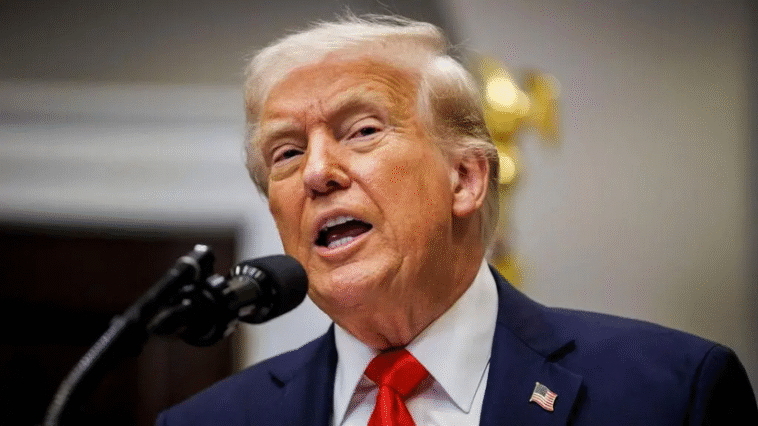
Minneapolis, USA President Donald Trump has defended intensified enforcement actions by U.S. Immigration and Customs Enforcement (ICE) in Minnesota, describing efforts to remove violent offenders from the country while criticising local leaders for opposing the federal operations.
In a post on his social media platform on Sunday, Trump said ICE is “removing some of the most violent criminals in the world from our country” and questioned why Minnesota officials are resisting the efforts.
He criticised protesters as “professional agitators and anarchists” and attacked state leaders, including Governor Tim Walz and Congresswoman Ilhan Omar, accusing them of using the unrest to distract from broader issues in the state.
The remarks come amid widespread unrest in Minneapolis following the fatal shooting of 37-year-old Renee Nicole Good by an ICE agent during a large-scale immigration enforcement operation earlier in January.
Her death has sparked daily protests and deeply divided public opinion on federal immigration policy and the use of force.
Good’s killing, which occurred during a federal immigration raid, has led to legal challenges and protests across the Twin Cities.
Local officials have criticised the federal narrative, while federal authorities have defended ICE actions as lawful.
Tensions escalated when a federal judge ruled that immigration agents cannot detain or use force against peaceful protesters absent suspicion of criminal behaviour, restricting some aspects of the federal response to demonstrations.
Minnesota leaders have filed a lawsuit against the federal government, alleging that the scale and conduct of ICE operations violate state and constitutional protections.
The situation remains fluid as both sides—federal authorities and state officials—continue to spar over enforcement tactics, public safety, civil liberties and federal-state authority in immigration matters.if you’re reading from Phoenix, Click on Read Original at the top to read full details


Demonstrations have drawn significant crowds, and public sentiment is sharply divided on ICE’s role and tactics in the region.
Get Breaking News Before Everyone Else — Join Our Whatsapp Channel Now!!!
𝗙𝗼𝗹𝗹𝗼𝘄 𝗢𝘂𝗿 𝗪𝗵𝗮𝘁𝘀𝗔𝗽𝗽 𝗖𝗵𝗮𝗻𝗻𝗲𝗹 𝗧𝗼 𝗚𝗲𝘁 𝗟𝗮𝘁𝗲𝘀𝘁 𝗡𝗲𝘄𝘀 𝗔𝘀 𝗜𝘁'𝘀 𝗗𝗿𝗼𝗽!