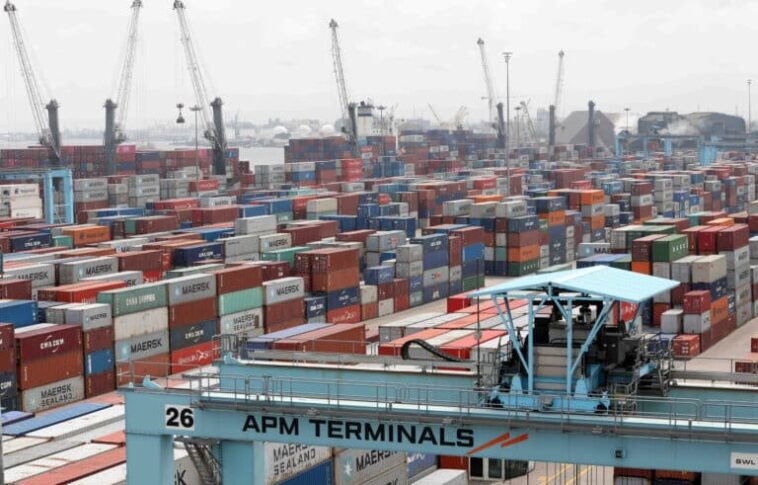
UK-backed financing targets chronic inefficiencies costing the African economy $14.2bn annually.
According to the African Centre for Supply Chain, the country loses an estimated $14.2 billion annually to inefficiencies at key seaports, driven by congestion, outdated infrastructure and bureaucratic delays.
These constraints have made Nigerian ports among the most expensive in West Africa, raising costs for importers and exporters while eroding competitiveness.
Nigeria is committing nearly $1 billion to overhaul its busiest seaports, betting that modern infrastructure and faster cargo clearance can reverse years of costly inefficiencies that have weighed on trade and economic growth.
Under a 746 million pound ($990.3 million) export finance agreement announced on Thursday, the United Kingdom (UK) will support the redevelopment of the Lagos Port Complex (Apapa) and Tin Can Island Port — two gateways that handle the bulk of Nigeria’s maritime trade.
The facility, backed by UK Export Finance and arranged by Citibank, is designed to modernise operations, expand capacity and digitise processes that remain heavily manual.
Get Breaking News Before Everyone Else — Join Our Whatsapp Channel Now!!!
𝗙𝗼𝗹𝗹𝗼𝘄 𝗢𝘂𝗿 𝗪𝗵𝗮𝘁𝘀𝗔𝗽𝗽 𝗖𝗵𝗮𝗻𝗻𝗲𝗹 𝗧𝗼 𝗚𝗲𝘁 𝗟𝗮𝘁𝗲𝘀𝘁 𝗡𝗲𝘄𝘀 𝗔𝘀 𝗜𝘁'𝘀 𝗗𝗿𝗼𝗽!