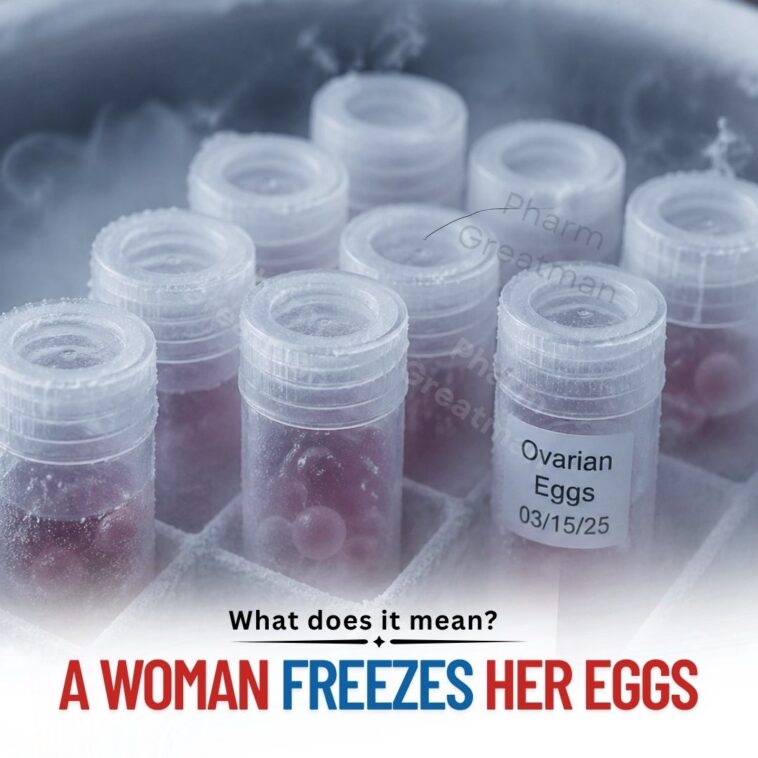
Medical experts say more women are turning to egg freezing as a way to plan their reproductive future, amid growing awareness of age-related fertility decline and lifestyle considerations.
The procedure, known as Oocyte Cryopreservation, involves collecting a woman’s eggs, freezing them, and storing them for potential use at a later stage.
Specialists explain that the approach allows women to preserve eggs at a younger age, when they are typically healthier, rather than attempting pregnancy later when fertility may have declined.
Why women are choosing egg freezing
According to fertility experts, women opt for egg freezing for various reasons, including career priorities, financial readiness, or not having found a suitable partner. Others undergo the procedure for medical reasons, particularly before treatments such as chemotherapy that may affect fertility.
“It is essentially a way of preserving options,” a reproductive health specialist noted.
How The Process Works
The procedure is carried out in stages. It begins with hormone injections over a period of about 10 to 14 days to stimulate the ovaries to produce multiple eggs.
The eggs are then retrieved through a minor medical procedure and frozen using a rapid-cooling method known as vitrification.
Doctors say the retrieval process is usually done under sedation, with most patients experiencing only mild discomfort and recovering within a short period.
Benefits And Limitations
Experts highlight that egg freezing provides flexibility, allowing women to delay pregnancy without relying solely on natural fertility timelines. It may also reduce the pressure associated with making immediate reproductive decisions.
However, specialists caution that the procedure does not guarantee future pregnancy.
Success rates depend on several factors, including the woman’s age at the time of freezing, the number of eggs stored, and overall health.
Best Timing And Risks
Medical guidance suggests that freezing eggs at a younger age — typically in the late 20s to early 30s — tends to yield better outcomes, as egg quality declines over time.
While the procedure is generally considered safe, there are potential risks. These include side effects from hormone stimulation, such as ovarian swelling, and minor procedural risks like bleeding or infection.
Storage And Long-term Outlook
Experts note that frozen eggs can be stored for several years without significant loss of quality, and successful pregnancies have been recorded after extended storage periods.
Who May Consider The Option
Egg freezing may be suitable for women who wish to delay childbirth, those with medical conditions that could affect fertility, individuals with a family history of early menopause, or anyone seeking greater control over their reproductive timeline.
Expert Advice
Healthcare professionals emphasise the importance of informed decision-making. They advise women to consult qualified fertility specialists, understand the medical and financial implications, and maintain realistic expectations about outcomes.
Observers note that while egg freezing offers increased reproductive choice, it is not a certainty, and careful planning remains essential.
As awareness grows, experts stress that the decision should be guided by accurate information, personal goals, and professional medical advice.
Get Breaking News Before Everyone Else — Join Our Whatsapp Channel Now!!!
𝗙𝗼𝗹𝗹𝗼𝘄 𝗢𝘂𝗿 𝗪𝗵𝗮𝘁𝘀𝗔𝗽𝗽 𝗖𝗵𝗮𝗻𝗻𝗲𝗹 𝗧𝗼 𝗚𝗲𝘁 𝗟𝗮𝘁𝗲𝘀𝘁 𝗡𝗲𝘄𝘀 𝗔𝘀 𝗜𝘁'𝘀 𝗗𝗿𝗼𝗽!