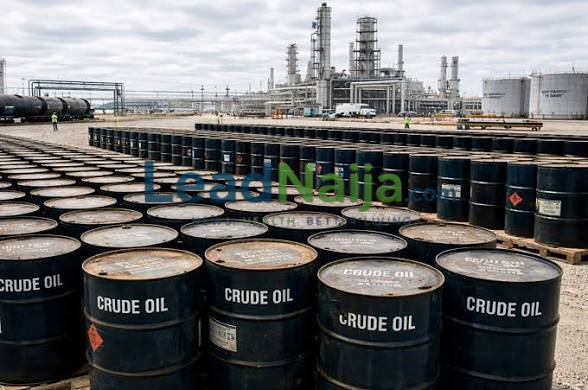
Global oil prices extended their decline on Thursday after the United States and Iran signed an interim agreement designed to reduce regional tensions, reopen the Strait of Hormuz and pave the way for increased Iranian oil exports.
The development strengthened expectations of a larger global oil supply, prompting traders to sell crude futures for a second consecutive day.
International benchmark Brent crude dropped by more than 2 per cent to $77.87 per barrel in early trading, adding to losses recorded earlier in the week following reports of progress in negotiations between Washington and Tehran.
Why Oil Markets Reacted
Energy markets responded quickly to the agreement because Iran remains one of the world’s major oil producers.
Under the reported arrangement, Iran is expected to reopen the Strait of Hormuz, a strategic maritime route through which a significant share of global oil shipments passes.
In exchange, the United States is expected to ease restrictions on Iranian oil exports and relax some maritime-related sanctions.
Analysts say the prospect of additional Iranian crude entering international markets has eased concerns about supply shortages, contributing to the drop in oil prices.
Agreement Signed After High-Level Talks
The memorandum of understanding was reportedly signed following discussions involving U.S. President Donald Trump and Iranian representatives during meetings held alongside the G7 Summit.
Iranian officials confirmed that the document had been finalised, describing it as an important step toward reducing tensions and establishing a framework for further negotiations.
Pakistan’s Prime Minister, Shehbaz Sharif, also announced plans for a ceremony in Switzerland, where technical discussions and implementation talks are expected to continue.
Iran to Resume Oil Sales
One of the most significant provisions of the agreement would allow Iran to resume oil exports immediately.
Broader sanctions relief, however, is expected to depend on the outcome of additional negotiations scheduled during a 60-day transition period.
The agreement also reportedly includes provisions for Iran to dilute part of its enriched uranium stockpile under United Nations supervision, a move viewed by Western governments as a confidence-building measure.
Trump Warns Compliance Is Essential
Despite the diplomatic breakthrough, President Trump reportedly warned that the United States could reconsider its position if Iran fails to meet its obligations under the agreement.
His comments suggest that while tensions may be easing, significant challenges remain before a permanent settlement can be achieved.
Regional Security Concerns Persist
While the agreement has raised hopes of broader regional stability, security concerns remain in parts of the Middle East.
Fighting was reported in southern Lebanon, where Israeli authorities said military personnel were killed and wounded during clashes.
Israeli Prime Minister Benjamin Netanyahu has maintained that Israeli forces will continue operating in certain areas despite the agreement, while Hezbollah leaders have welcomed the development and called for further diplomatic progress.
Why This Matters
The agreement could reshape global energy markets by increasing oil supply and reducing concerns about disruptions in one of the world’s most important shipping corridors.
For oil-importing nations, lower crude prices may help ease fuel and transportation costs. However, for oil-exporting countries such as Nigeria, a sustained decline in global oil prices could affect government revenue and foreign exchange earnings.
The coming weeks will determine whether the agreement leads to lasting stability or remains a temporary diplomatic breakthrough.
What to Watch
– Whether Iran fully reopens the Strait of Hormuz.
– The impact of additional Iranian oil exports on global prices.
– Reactions from major oil-producing nations.
– Progress in negotiations during the 60-day transition period.
– Potential effects on Nigeria’s oil revenue and economic outlook.
Get Breaking News Before Everyone Else — Join Our Whatsapp Channel Now!!!
𝗙𝗼𝗹𝗹𝗼𝘄 𝗢𝘂𝗿 𝗪𝗵𝗮𝘁𝘀𝗔𝗽𝗽 𝗖𝗵𝗮𝗻𝗻𝗲𝗹 𝗧𝗼 𝗚𝗲𝘁 𝗟𝗮𝘁𝗲𝘀𝘁 𝗡𝗲𝘄𝘀 𝗔𝘀 𝗜𝘁'𝘀 𝗗𝗿𝗼𝗽!