
 Leadnaija
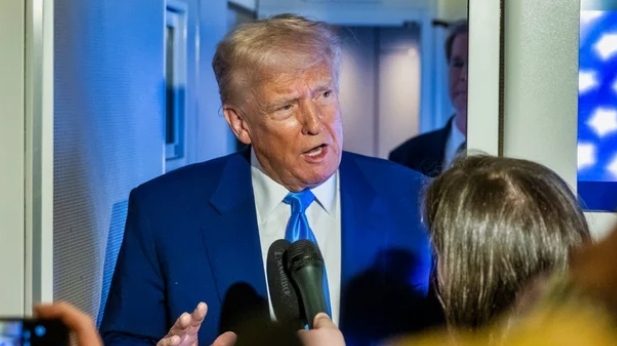
US President Donald Trump has announced a major economic pressure campaign against Iran, warning countries and institutions that continue providing support to Tehran of severe consequences.
Trump described the planned measures as an unprecedented campaign of economic pressure, saying Washington would target countries and entities that provide Iran with access to financial institutions, businesses, airports and government facilities.
The announcement marks a further escalation in the confrontation between Washington and Tehran, although the latest measures are focused primarily on economic pressure rather than an immediate expansion of direct military operations.
Trump threatens unprecedented economic pressure
Trump said the United States would pursue what he described as “Economic Warfare and Isolation on an unprecedented scale”, while calling the campaign an economic “D-Day.”
The US president also urged American allies to support the measures and warned countries that provide Iran with what he described as a “lifeline” that they could face consequences.
The policy is expected to place additional pressure on Iran’s economy while also testing the willingness of countries such as China and Russia to continue their economic relationships with Tehran.
US Treasury Secretary Scott Bessent also indicated that the economic strategy could reduce the likelihood of another major military escalation.
Bessent said the measures could make a large-scale resumption of military action unnecessary, describing the planned economic response as an exceptionally broad international pressure campaign.
Iran warns of retaliation
Iran has responded with threats of its own.
According to statements reported by Reuters, the chief of staff of Iran’s Armed Forces, Maj. Gen. Ali Abdollahi, warned that Tehran would respond forcefully to any new US action.
He said Iran’s military was prepared across land, sea, air, air defence and cyberspace and would respond to threats with what he described as a “devastating” response.
Iranian officials have also rejected the suggestion that Washington’s latest pressure campaign will force Tehran to surrender.
Parliament Speaker Mohammad Bagher Ghalibaf said Iran would need to develop strategies to withstand the sanctions and overcome their economic impact.
Could economic pressure force a new deal?
The central question now is whether Washington’s economic strategy can persuade Tehran to reach an agreement over issues including the Strait of Hormuz and Iran’s nuclear programme.
The Trump administration appears to be betting that sustained economic pressure can force Iran back to negotiations while avoiding another major military confrontation.
However, Iran’s response indicates that its leadership does not intend to accept the pressure without resistance.
The situation is particularly sensitive because the Strait of Hormuz is one of the world’s most strategically important energy routes, and prolonged disruption could have consequences for global oil markets.
For now, the confrontation remains a combination of economic pressure, military threats and diplomatic manoeuvring.
Whether Trump’s strategy eventually forces Tehran into a deal, weakens the Iranian government or instead produces another escalation remains uncertain.
⇒Be The First To Read The Hot News;
Tap The Whatsapp Banner To Join Our ⇓Whatsapp Channel